
MMFS is looking at a compounded annual growth rate (CAGR) of 18 per cent in assets under management (AUM) during FY23 to FY26 on the back of the strong recovery. The company has initiated risk-mitigating initiatives, including diversification into non-vehicle loans, building digital capacity and re-classification of customer profiles into affluent and mass-affluent in semi-urban segments to better target marketing.
Debt management is going to be a worry for the Vedanta group until FY25 at least. However, the restructuring of business divisions in Vedanta India could lead to an unlocking of values. The group structure is fairly complex. Anil Agarwal-led Vedanta Resources (VRL), which is London-listed, has a lot of debt on the balance sheet. It will have to repay $1 billion in secured bonds by January 2024 and at least another $300 million in calendar 2024.

While Emami is still struggling to push growth, given weak rural demand, the sale of the group's stake in AMRI Hospitals should ease investor concerns about stake pledges by promoters. It has also carried a series of stake acquisitions which should enable the expansion of its brand portfolio. The Q2 results are likely to see flat volumes and low revenue growth alongside some gross margin expansion.

Sikhs have more in the way of domestic clout and electoral representation in Canada than they do in India. No politician in Ottawa can ignore the concerns of a community with this level of representation, notes Devangshu Datta.

The affordable housing segment may be seeing an uptick which is a good sign of consumption momentum. This is the biggest-ticket purchase for middle income and lower income families. The current activity is at least partly driven by a pause in interest rate hikes.

The sector may be overcrowded with a fair number of large players and the entry of the Adani Group through its two key acquisitions, followed by the takeover of majority stake in Sanghi Industries via Ambuja Cements. Since every major player is in expansion mode, there could be a capacity surplus and hence, price wars.

India's trade account could come under pressure and there could be an inflation push if crude oil prices remain above the $90 per barrel (Brent) for a prolonged period since India imports over 85 per cent of its oil and roughly 50 per cent of its gas. A rebound in economic activity is bound to lead to higher fuel demand. While India is the third-largest importer of crude, it is a net exporter of refined products, which helps to compensate to some degree.

Core retail segments like motor and health continue to report strong growth of 19-20 per cent with competitive intensity still visible in the motor OD (owner driven) segment. Commercial lines reported muted growth. Group health remains a key driver. Among the listed companies, ICICI Lombard continues to trail in the motor section while Star Health has lost its Y-o-Y retail market share although its better on a sequential basis.

In August, the Reserve Bank of India Governor Shaktikanta Das held a meeting with chief executive officers/ managing directors (CEOs/ MDs) of large non-banking financial corporations (NBFCs). The discussions included diversifying borrowing sources for NBFCs and housing finance companies (HFCs) to contain increasing reliance on bank borrowing, risks associated with high credit growth in retail segment in unsecured loans, prioritising IT upgrades and cyber-security, improving provisioning, monitoring of stressed exposures and slippages, ensuring robust liquidity and asset-liability management, ensuring transparency in pricing, creating robust grievance redress mechanisms.

Tata Steel UK is reformatting its operations in Port Talbot by investing 1.25 billion in an electric arc furnace facility with the UK government contributing 500 million. The project will take around three years to complete, if all the regulatory clearances come through. The facility will use scrap and be classified as green since it will utilise renewable power and cut carbon emissions considerably.

There have been several positive signals in Bharti Airtel with revenue market share (RMS) growth, better visibility of profits from Africa, and enough free cash flow to pursue deleveraging. Airtel's 4G and 5G data subscriber net additions were 5.6 million in Q1FY24, and 24.5 million in the last 12 months. Airtel currently has 230 million data subscribers on 4G/5G, which is about 70 per cent penetration of its base of 339 million subscribers.

The power sector is always strongly correlated to economic activity and is receiving its share of investor attention as India's post-Covid-19 recovery continues. India's leading integrated power producer, the public sector undertaking (PSU) NTPC controls around 25 per cent of India's power capacity. It continues to increase installed capacity, in thermal as well as renewables (solar, wind, green hydrogen) and hydropower and pumped hydro, and also has backward integration into coal mining, and explored nuclear.

Private players continued to show strong momentum in the life insurance individual new business segment during August, 2023. On an aggregate, the industry registered 14 per cent growth year-on-year (Y-o-Y) compared to 15 per cent in July '23. Private players were up 21 per cent Y-o-Y, up from 16 per cent Y-o-Y in July '23, while public insurers' growth was muted at 3 per cent.

IDFC First Bank delivered good results in the first quarter of this financial year (Q1FY24), but some analysts are concerned the bank is fully-valued. So, there has been profit-booking after a price rise. Growth went side-by-side with a focus on cutting interest costs and exposure to high non-performing infrastructure loans. The mortgage book is 28 per cent, of which 24 per cent is home loans and loans against property.
The One97 Communications stock saw a surge in interest as the company's operating performance update for August was considered positive by the Street. In addition, there was a news buzz as the company released a new hitech soundbox, which has longer battery life and processes all major cards. The performance indicates that the company, which is better known by its Paytm brandname, is still on course to achieve its guidance of going cashflow positive by the end of the 2023-24 financial year (FY24).

After disappointing guidances in the first quarter (Apr-Jun) of the 2023-24 financial year (Q1FY24) and valuation downgrades, the Indian IT sector could see some positive repricing as the bad news for IT maybe easing in Q2FY24. A key negative factor was weaker demand from the US financial sector and from North America in general. The latest GDP (gross domestic product) estimates and sector-specific news suggest that the demand situation may not be quite so bad with a gradual recovery in tech spending in Q2.
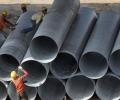
Industrial metals (ferrous and non-ferrous) suffered great volatility once the Ukraine War began in February 2022. First, there was a sharp price rise due to fears of supply disruption, followed by weak global demand. China's weakness and rolling lockdowns have hit production and demand.

In the April-June quarter (Q1) of 2023-24 (FY24), growth in sales of FSN E-Commerce Ventures (the parent company of Nykaa) decelerated to 24 per cent year-on-year (Y-o-Y), and 9 per cent quarter-on-quarter (Q-o-Q), compared with 34 per cent in the previous quarter, due to a decline in the beauty & personal care (BPC) and fashion division's gross merchandise value (GMV). But Nykaa claimed it gained market share in both divisions. The earnings before interest, taxes, depreciation, and amortisation (Ebitda) margin of 5.2 per cent expanded 120 basis points (bps) from a year earlier.

Margins for the oil refining and retailing sector have moved off their peaks, and the average integrated margins (refining plus marketing) for oil marketing companies (OMCs) have normalised. The ascent in crude oil prices, combined with static retail prices, has depressed marketing margins for diesel and petrol. However, the fall in marketing margins has been offset by increased gross refining margins (GRMs).

Cement companies posted mixed figures for the first quarter of the 2023-24 financial year (Q1FY24). Volume growth was robust at 17 per cent year-on-year (Y-o-Y) - on an aggregate basis - for 15 cement companies, with revenue growth at 15 per cent. Aggregate earnings before interest, taxes, depreciation, and amortisation (Ebitda) were up 8.8 per cent Y-o-Y and 1.2 per cent quarter-on-quarter (Q-o-Q).
 © 2025 Rediff.com - Investor Information - Advertise with us - Disclaimer - Privacy Policy - Sitemap - Feedback - About us - Terms of use - Grievances